
Full House(Transcribed by GIBSON BOY)
We have now reached the ninth transcription by Gibson Boy. This time, I am introducing Wes’s original piece “Full House” from the Riverside live album Full House, a track beloved by not only Wes fans but also many jazz enthusiasts. Although this piece has already been transcribed in various publications both domestically and internationally, this transcription offers a fresh perspective by focusing on the version played during Wes Montgomery’s TV appearance in London, as released on the DVD WES MONTGOMERY Live In ’65/JAZZ ICONS 2.119003. This might be the first attempt by Gibson Boy to transcribe this particular take. Notably, this piece features a characteristic ad-lib in all of its album versions, which has also been analyzed here. This transcription serves as an excellent resource for both professionals and amateurs looking to add this piece to their repertoire.
Now, about “Full House.” The first time this official footage was available was in 1994 when it was released on laser disc and VHS by Papp as Wes Montgomery Quartet/Jazz625. It was highly praised as “moving Wes,” and his playing style and finger techniques attracted great interest. The host introduced “Full House” by saying, “He has seven children, and according to a gossipy friend, even grandchildren… (turning to Wes, ‘Are you a grandfather?’)… (Wes, taken aback, responded, ‘Yes’)… There’s no need to worry about retirement; he is still only 42 years old. Here is the perfect song for a large family, ‘Full House.'” Regarding the naming of this piece, Wes was blessed with five children (two sons and three daughters) throughout his life, which inspired the title “Full House,” a term from the poker hand comprising three of a kind and a pair. There is also a theory that the name was added later because the club was packed when he performed it live in 1962 without a title. Now, let’s dive into the analysis.
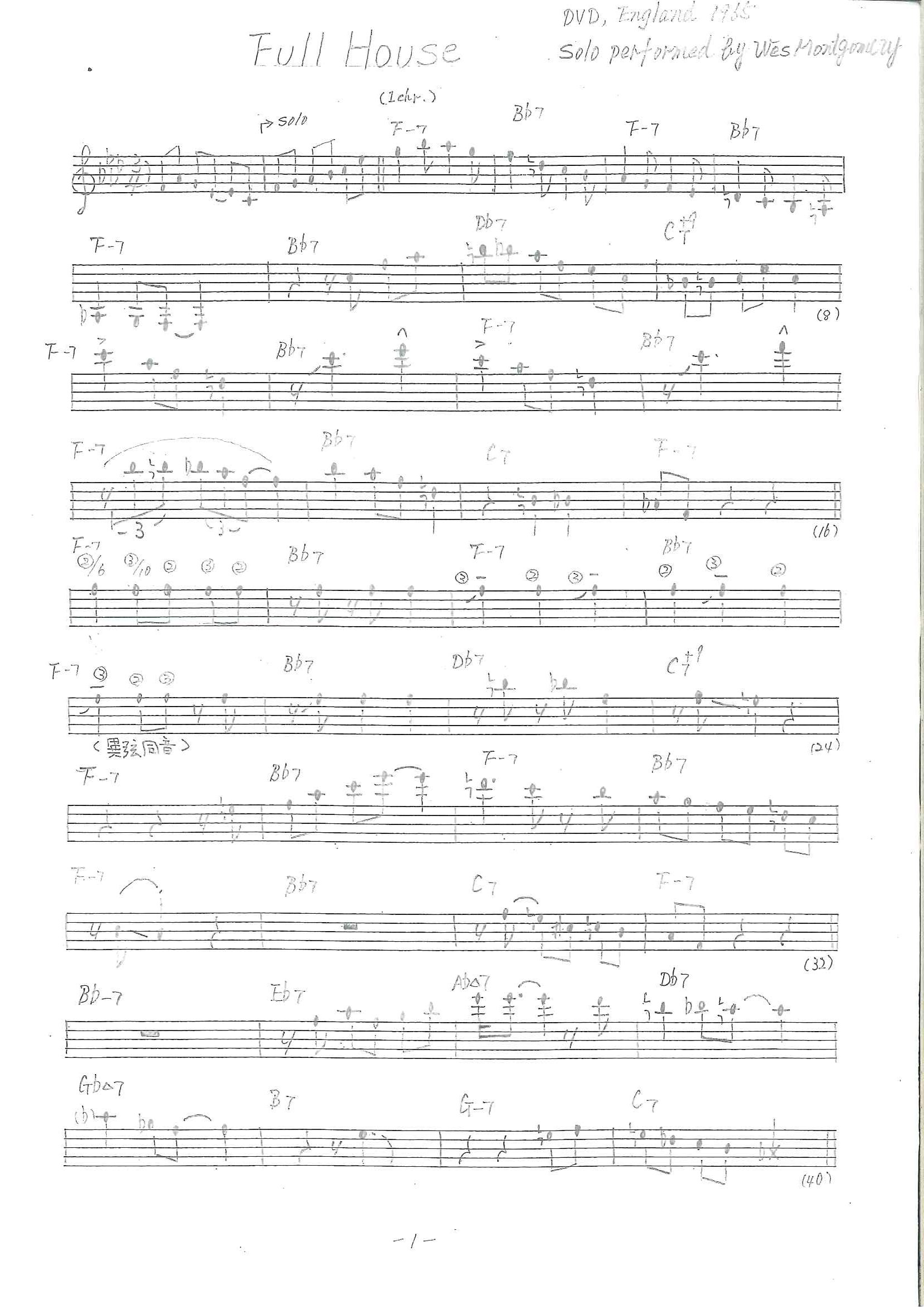
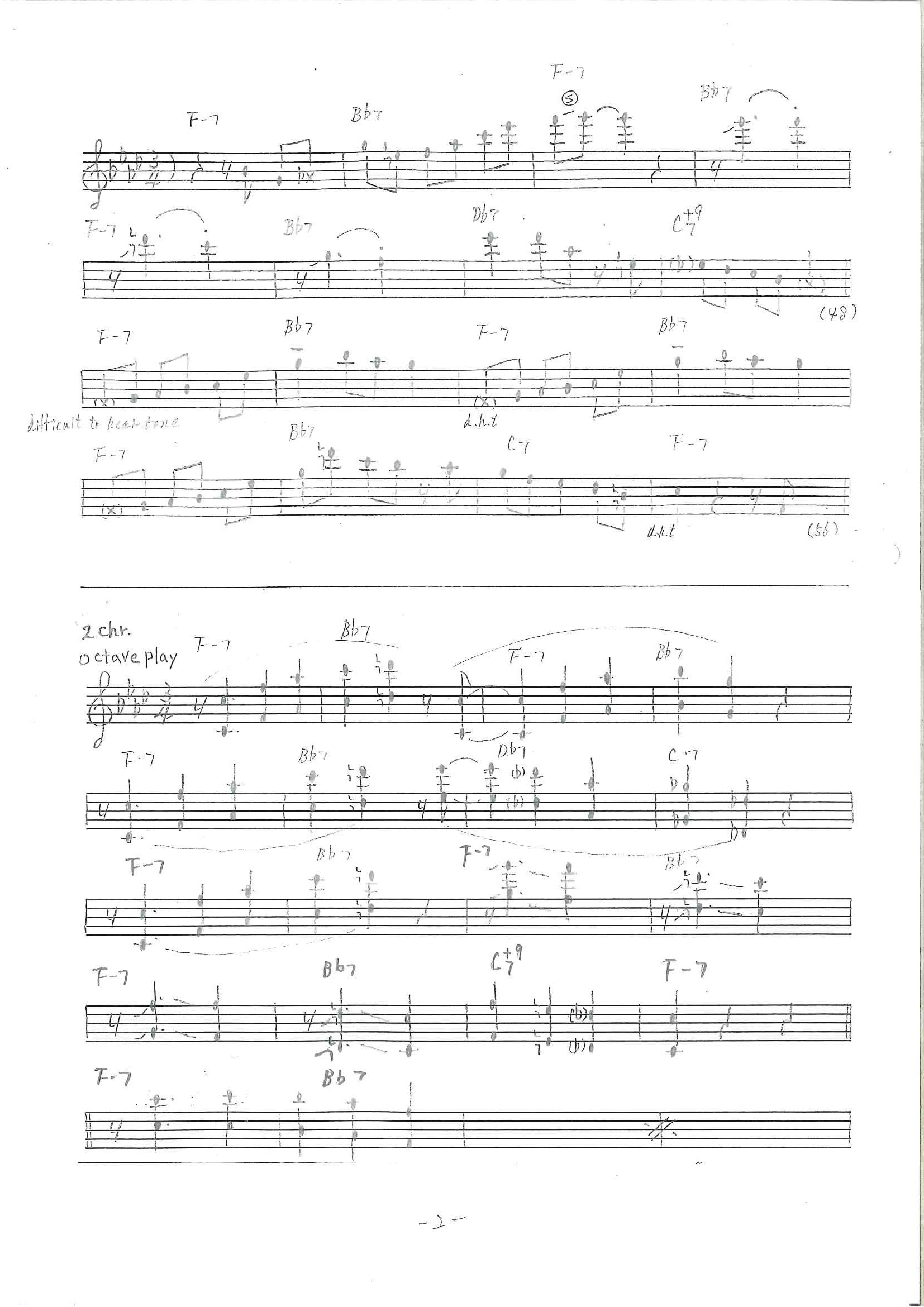
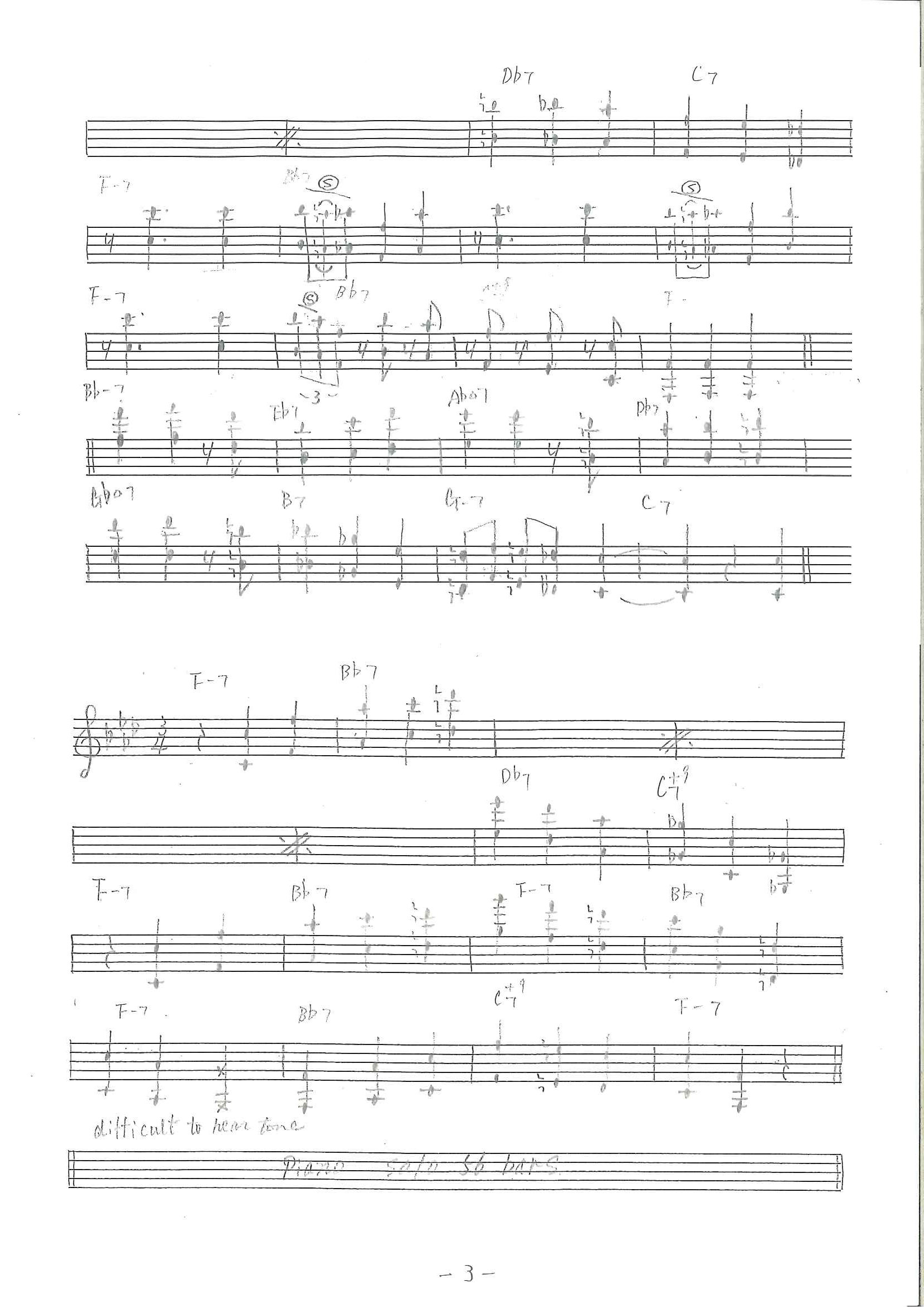
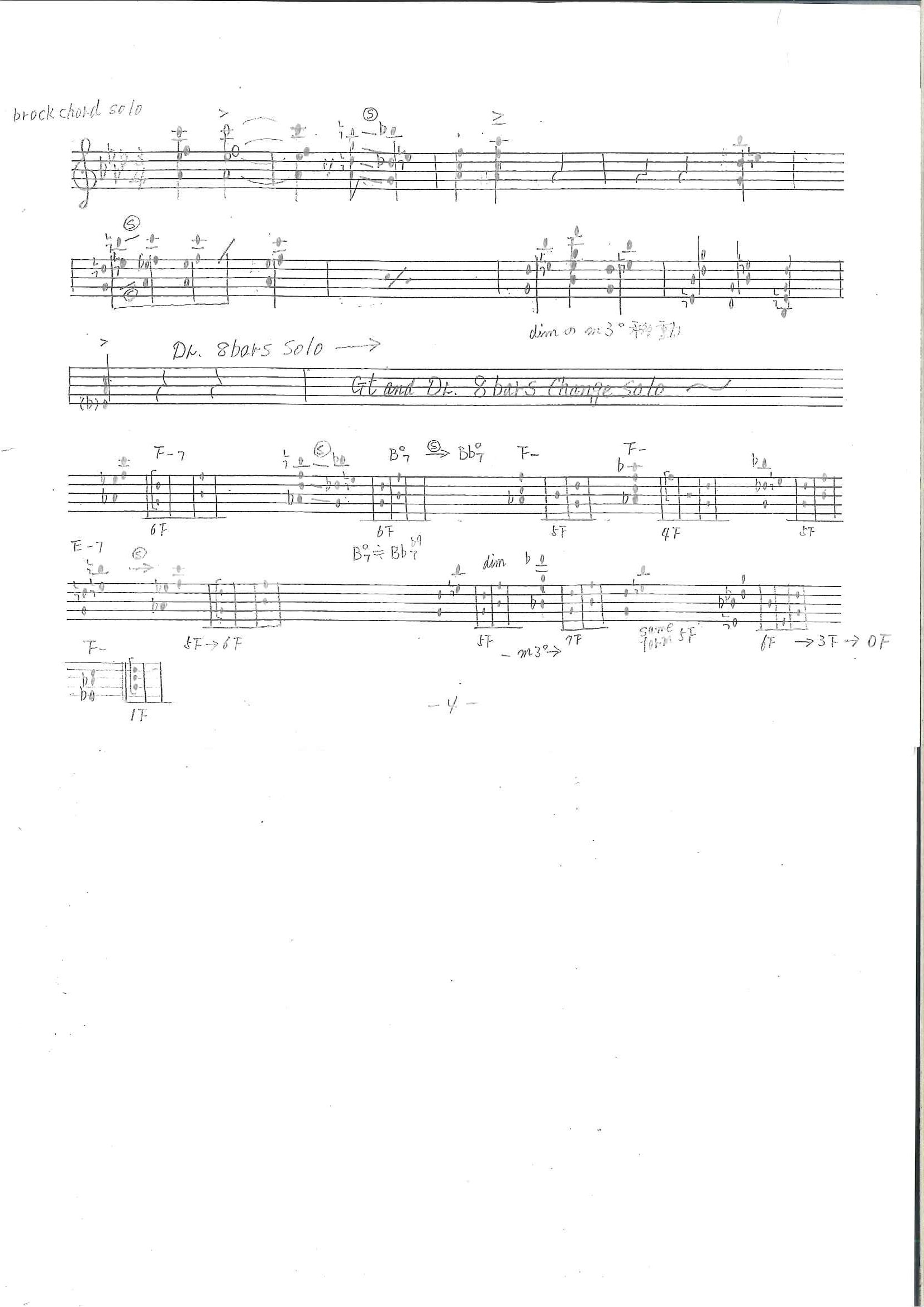
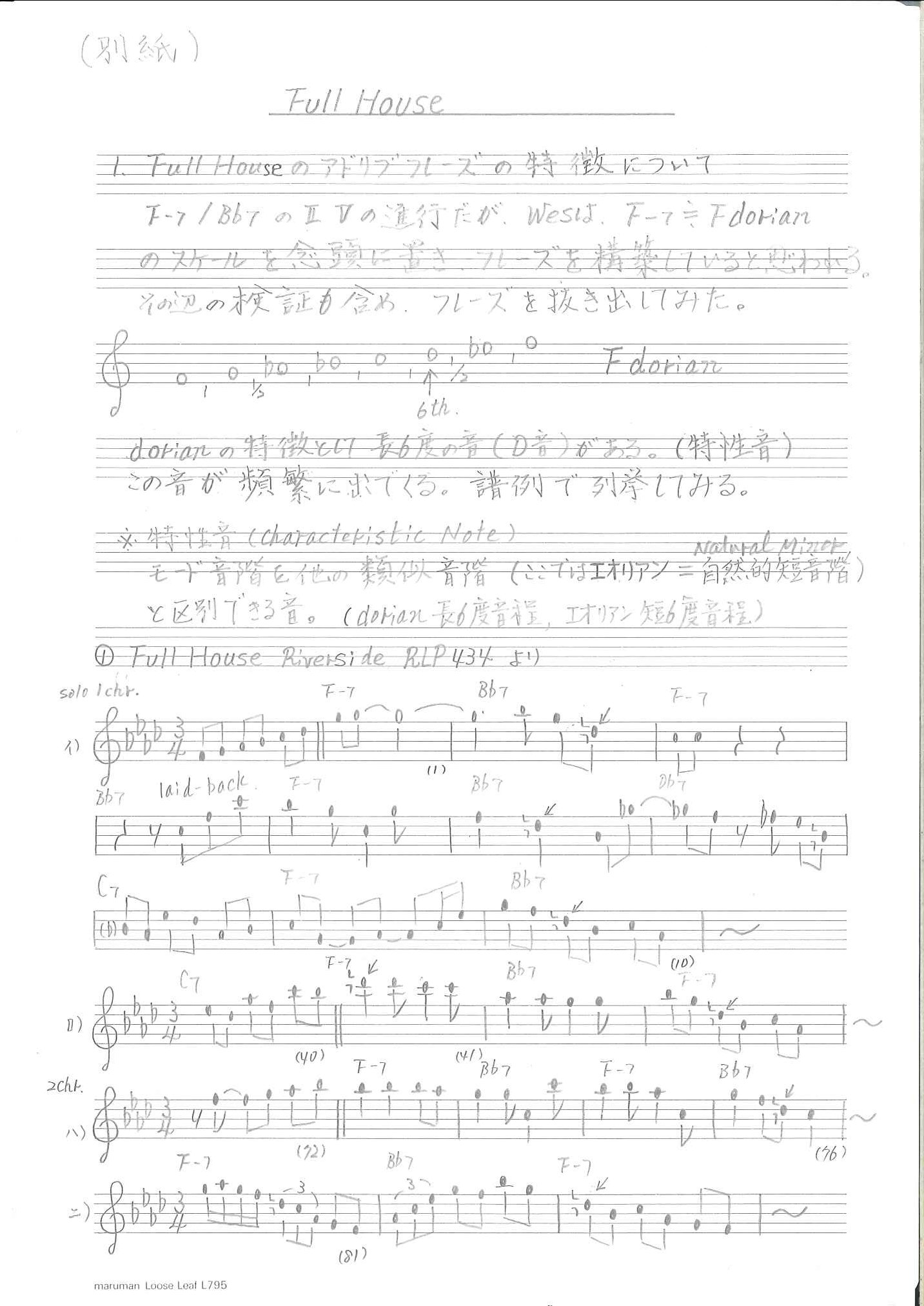
“Full House” is in the key of F minor and has a 56-bar structure (16+16+8+16). Except for the 8-bar bridge, the progression centers around the [Fm7-Bb7] [II-V] sequence. In the Riverside album Full House, the Jazz625 DVD, and this TV appearance from 1965 in London, there are moments in the ad-lib sections where you might think, “Huh? This doesn’t sound like [Fm7-Bb7] [II-V] phrases.” This curiosity prompted me to start transcribing. I extracted and compared solo phrases from the Riverside Full House and the London TV appearance WES MONTGOMERY Live In ’65.
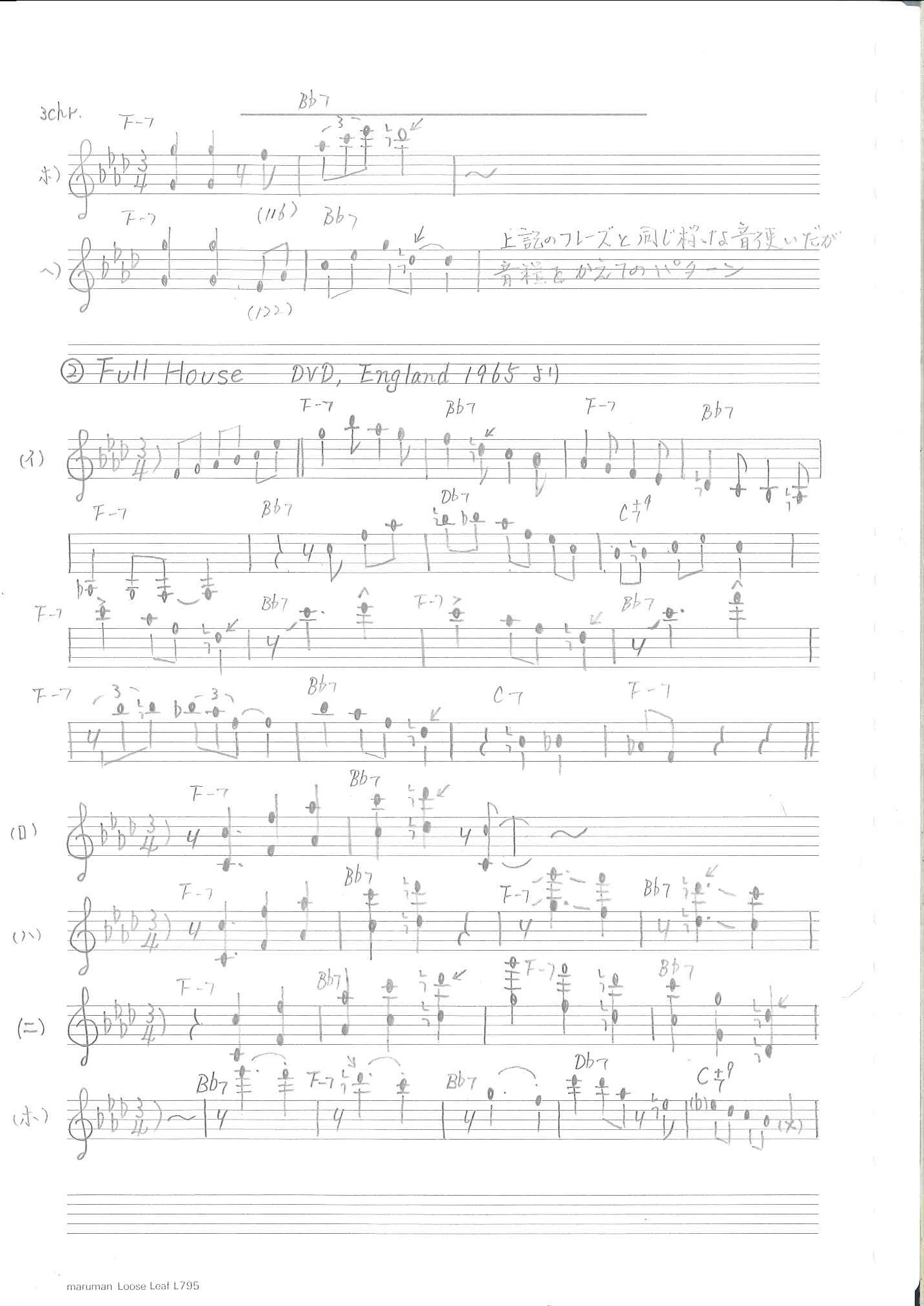
While the pianist plays the [Fm7-Bb7] [II-V] chords, it is generally expected for the soloist to ad-lib over this two-five progression. However, as I had anticipated, Wes frequently uses the D natural note (the major sixth in the F Dorian scale), which is characteristic of the Dorian mode. While this could be interpreted as the third of Bb7, the ad-lib phrases often feature this Dorian sound. Thus, Wes performed the solos not by following the [Fm7-Bb7] chord progression but by improvising using the F Dorian scale. The frequent appearance of the D note gives the piece a distinct sound, and Wes’s talent in playing this groove-filled Latin-inspired rhythm in 3/4 time shines through, making it a masterpiece.
GIBSON BOY