
The Fate of the Heart L5
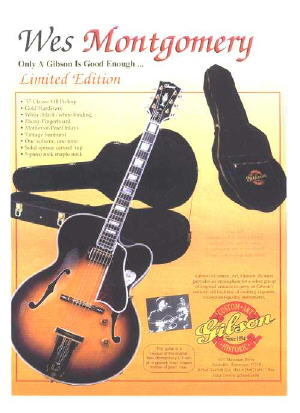
I recently published an astonishing article about the “Heart L5” in the “Wes Montgomery” section, thanks to further intriguing and detailed information shared by the well-known jazz critic Masaru Narita.
The source of this information is none other than Haruhiko Takauchi, a guitarist currently active in New York and a close acquaintance of Narita. Takauchi generously permitted us to use this information on our site, saying, “If it can be of any help to Wes fans, feel free to use it.”
Interestingly, before receiving Takauchi’s permission, Narita couldn’t contain his excitement and inadvertently leaked the news to the Wes Montgomery Fan Club (laughs). Ultimately, we were fortunate enough to obtain permission, and it truly feels like a privilege for Wes fans.
Thank you so much for this valuable information.
[Information provided by Masaru Narita]
Information from Haruhiko Takauchi relayed by Masaru Narita, Part 1:
Haru-san (Haruhiko Takauchi), a Wes freak, sent the following email:
“I have some news to share. Remember the Gibson L5 that Wes himself played, the one with the heart? It was damaged in a fire. Only the nitrocellulose finish, which has a low ignition point, burned, while most other parts remained mostly intact. Gibson’s custom shop repaired it, restoring it almost perfectly to its original state at that time.
Guess where it’s now? It’s up for sale at ‘Mandolin Brothers’ on Staten Island, NY!! The serial number is #62876. They haven’t put it on display in the store; it’s kept in the president’s office alongside guitars of Elvis Presley and John Lennon.
I haven’t asked about the price—frankly, I don’t want to know. I’ve asked Stan, the president, to show it to me, but our schedules haven’t aligned yet. Just wanted to let you know.”
‘Mandolin Brothers’ is a renowned guitar shop with a solid reputation for handling both old and vintage guitars.
Information from Haruhiko Takauchi relayed by Masaru Narita, Part 2:
“Today, I called Stan, the president, who invited me over to play the guitar. So, I went.
I took the South Ferry (now known as the Staten Island Ferry) and arrived at Staten Island. Then, I switched to bus #48 on Forest Avenue and in 10 minutes, I was at ‘Mandolin Brothers’.
The guitar is in superb condition, breathtakingly beautiful, and indeed, it bears the genuine ‘Wes Montgomery’ inscription on the heart-shaped pearl. The vertical script reflects a somewhat oriental writing style.
You can see slight burn marks from the fire on the sides and a tiny part of the top, seen through the finish. The neck, frets, and tailpiece are all original, giving a sense of how it felt when Wes played it. The wear on the frets tells a story of its own.
Interestingly, it has a wooden bridge instead of the original metal one. Many people don’t realize that a metal bridge can produce a rounder, fuller sound in guitar making.
Originally, it was a Gibson L5C with holes drilled by Gibson at that time to mount the humbuckers, making it thinner on the top compared to electric models. There are two holes in the neck for floating pickups.
Wes’ guitar is light and easy to play, and, above all, it sounds fantastic regardless of whose hands are on it. It’s easy to imagine you could play anything with such a good guitar.
Recently, George Benson expressed interest, but apparently, someone else is almost certain to get it among the current offers. It’s a record producer and guitarist living in California, though not focused on jazz.
Stan mentioned that he’d prefer it to go to someone who plays jazz if possible.
George Benson’s offer seems to have fallen well short of the mark. Stan said it might be settled as soon as next week.”
Narita mentioned that Takauchi introduced him to Stan over the phone, but Narita is scheduled to visit Manhattan this fall. By then, the guitar might have left the president’s possession, which he regrets. I share the sentiment, as I would have loved for Narita to be the first Japanese person to experience both of Wes’s legendary guitars, the ‘Diah’ L5 included, and to receive a firsthand report. Perhaps I’m being a bit too greedy… but is that such a bad thing?
Information from Haruhiko Takauchi relayed by Masaru Narita, Part 3:
In addition to the previous information, Narita answered a few more questions:
Q: Was the ‘Heart L5’ put up for auction?
A: ‘Mandolin Brothers’ didn’t put it up for “sale” but posted it on their site, serving as both an advertisement and an invitation. It’s customary for them to suggest the start of an auction.
However, according to Haru-san, he informed important and close friends like George Benson. Besides Benson, many others took the guitar in their hands and played it.
Q: The sadness of the poor, but I’m curious to know immediately—how much did it actually cost?
A: The auction price, the main concern, exceeded slightly more than $200,000, as Haru-san mentioned.
Q: Who acquired it in the end?
A: The detested (beloved?) buyer is a record producer and guitarist living in California. Who could it be?
Q: I recall that in the ‘Wemon’ section, Indianapolis’ ‘Meridian Music’ had owned this guitar. How did it change hands?
A: There’s a question about the flow of events after Gibson’s custom shop repair, which has passed some time now. How did it eventually reach ‘Mandolin Brothers’? Probably through some dark auction?
If I were really rich, my hands would reach out to offer to buy it. I might even say… how sad…